March 2026
Biophilia - Part Two
03/19/26 12:11 PM
What is Biophilia Anyway? (And Why it Matters More Than Ever)
Have you ever experienced almost a calmer feeling after walking in the woods or more focused when bathed with sunlight streaming through a window full of plants? That peaceful, uplifting feeling is not random - it is rooted in something called biophilia.Biophilia literal means "love of life" (from the Greek words "bio" for life and "philia" for love). The idea was popularized by biologist Edward O Wilson in his book Biophilia. He proposed the biophilia hypothesis: humans have an innate, biological tendency to connect with nature and other living things. It is wired into us from our beginning.
To simplify, we feel good around nature because we were designed to. Things like flowing water, greenery, natural light, organic shapes, and even animal companionship tap into this deep affinity.
Biophilia suggests that humans are drawn to nature-like elements, and neuroscience shows these reduce stress and restore attention. The use of artificial botanicals can mimic these effects.
Why Biophilia Feels So Good (Why it works)
When we bring nature into our lives - through biophilia design in home, offices, and cities - it can offer science backed perks. Here are a few examples.
- Reduces Stress and Anxiety - view of plants, natural patterns, or outdoor scenery lower cortisol (stress hormone) levels and help us relax.
- Boosts mood and mental health - connection to nature improves overall well-being, energy and even sleep quality.
- Enhances focus and creativity - spaces with natural elements help recharge attention, making it easier to concentrate and think innovatively.
- Supports physical health - natural light regulates our sleep- wake cycles, while plants and fresh air improve indoor environments.
Do Artificial Botanicals work with Biophilia?
Biophilia isn’t just about real plants—it’s about the feeling of nature. My artificial botanical designs bring that lush, calming connection indoors, no maintenance required. Lifelike greenery that reduces stress, boosts mood, and makes any space feel alive and restorative. Perfect for low-light rooms, busy homes, or allergy-friendly zones. Who says you can’t have endless green without the guilt?
Here's how and why they work
1. Visual connection to nature ( strongest trigger)
2. Creating a scene of presence
3. Consistency and reliability for lasting benefits
4. Accessibility in challenging spaces
Five ways to transform your environment.
1. Add vibrant aesthetics: faux plants bring lush greenery or colorful blooms to any room instantly elevating its visual appeal. From sleek modern succulents to cascading ivy, they fit any style- minimalist, bohemian, or traditional - all without wilting and watering. Suggestion: Place a tall artificial fiddle leaf fig in a corner to fill up an empty space or use a faux floral arrangement as a dining table centerpiece for year around charm that relates to your style.
2. Create Low Maintenance Focal points: Unlike real plants, artificial botanicals do not require watering, pruning, or sunlight, making them ideal for busy lifestyles or spaces with poor lighting. A large faux monstera in a stylish pot can anchor a living room, drawing attention
3. Enhance Space Division: As an interior designer, I have utilized various methods and materials to act as dividers for open spaces. Using artificial plants can be a beautiful way to create a natural divider in open concept plans. Consider a row of tall faux bamboo in narrow tall planters or consider a vertical garden wall that can separate living areas from workspaces. This will add privacy and provide a calming vibe. These design are always beautiful without maintenance, and ensuring consistent structure and style in your layout.
4. Boost Mood with Biophilic Design: Artificial plants mimic stress -reducing effects that you receive from nature by promoting a sense of well-being. A cluster of artificial ferns on shelves or a faux moss wall in a bedroom can create a serene atmosphere. Since they don't die or shed, they maintain a clutter-free, uplifting environment effortlessly. The installation is far less expensive than a real living wall that would require plumbing and regular maintenance as well.
5. Offer Versatile, Seasonal Flexibility: Artificial botanicals allow you to switch up your decor without commitment. Swap faux winter arrangements for spring or Autumn to match seasons or holidays. Wall - mounted artificial wreaths or hanging planters can refresh a space instantly, with no need for replanting or cleanup, keeping your home dynamic and inviting.
Here is an arrangement that is non seasonal. The greenery and animal life bring nature indoors. What a beautiful way to add biophilia to your home or office.
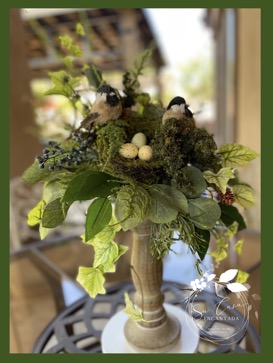
These designs deliver enduring style, practicality, and ambiance , transforming any space with lower cost installations and zero maintenance.
Neuroaesthectics and Biophilia
03/18/26 03:00 PM
Part One
What is Neuroaestheics?
Neuroaesthectics reveal how the brain responds to beauty, symmetry and visual harmony.
What does it have to do with my botanical designs?
As mentioned in previous blogs the application and use of design principles in can be found all my work. Both interior design and botanical design. I use design principles to guide my botanical designs to maximize pleasure which relates back to the term and application of neuroaesthectics.
How do I do this?
Incorporation of Symmetry and Fractals
The brain finds symmetrical and fractal patterns (common in nature) to be aesthetically pleasing. When I create my designs I look to create balanced compositions or repeat patterns such as evenly spaced artificial leaves or florals with fractal like branching. Example would be a wreath with a symmetrical cluster of sunflowers which can evoke a sense of harmony.
Use of Vibrant and Natural Color
Neuroaesthetic studies show that colors such as green, earthy browns or vibrant hues (eg orange pink or blue such as my Dia de los Muertros pieces) trigger a positive emotional response. My designs mimic nature's palette which in turn engages the brain's reward pathways.
Visual Depth
In my designs I look for ways to create visual depth by layering elements such as mixing large blooms with smaller filler flowers or ribbons which add complexity. Neuroaesthectics suggest that this captivates the brain's visual processing areas for example the occipital cortex. Look at my Halloween themed arrangements with witch legs and pumpkin use various textures to draw attention.
Resonance Emotion
Neuroaesthectics emphasizes that art evoking emotions like awe or joy engages the insult. Designing arrangements that tell a story or evoke specific moods create strong emotional connections. Examples are Cozy fall vibe, festive Dia de los Muertos energy.
Stay tune and I will talk about Biophilia in my next Blog post. I will explain what it is, why it matters, how it works and examples of incorporating in your home.